
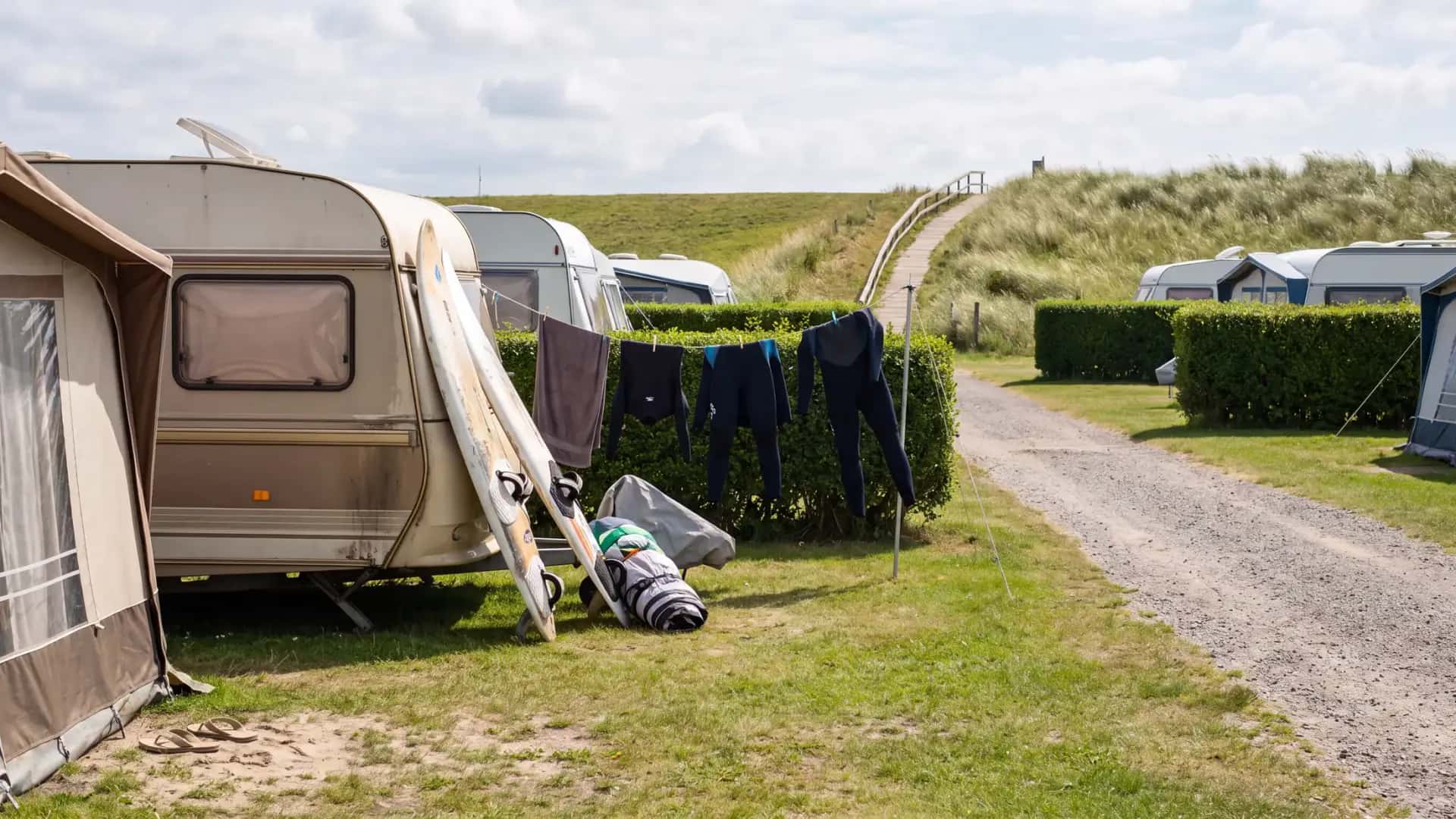
Surfing, kiting & more
Surfing, Kiting and Watersports on the Baltic
Fehmarn is one of the best watersports areas on the German Baltic coast. The wind is the reason.
Several sites have their own surf and kite school right on the beach, for a first attempt at standing up as much as for people who have been at it for years. SUP, sailing and diving are available too.
Wind, not waves
When people talk about surfing on the Baltic, they almost never mean riding waves. The Baltic lacks the open expanse needed for a long swell to build. What it produces is short, steep chop that arrives with the wind and leaves with it.
That sounds like a drawback but is exactly why the area works. Windsurfing, kiting and wing foiling need wind, not swell. And the Baltic has wind reliably, particularly along the Schleswig-Holstein coast.
In practice you plan around the wind forecast rather than the wave forecast. And you look not only at the strength but above all at the direction.
Direction matters more than strength
For beginners this is the decisive lesson, and websites rarely state it plainly enough. Offshore wind, blowing from the land out to sea, pushes you away from shore. It feels harmless at the water's edge because the surface there is flat, and it strengthens with every metre. Anyone who loses their gear cannot get back against it.
Onshore wind pushes you towards the beach. That is safer, but it brings shorebreak and makes launching messy. The most comfortable is side shore wind running parallel to the coast: you get out and back without fighting it.
Every spot therefore has directions where it works and directions where you are better off driving twenty minutes further. On an island that is an advantage, because one side always fits.
The spots on Fehmarn
Fehmarn has several areas that work in different ways. The best known is the Orther Reede on the west side, a shallow sheltered bay where you can stand across large stretches. That standing depth is what makes it beginner territory: fall off and you are back on your feet instead of swimming after your board. Most of the island's schools work there.
The Grüner Brink in the north and the bay at Gold in the southeast are more open and get ridden by experienced kiters when the direction suits. The Südstrand offers more space and more activity, with better infrastructure. The quietest stretches are on the west coast between Wallnau and Flügge.
Because the island has water on all sides, the question is never whether the wind fits, but which spot it fits today.
Learning to kite: what to expect
A beginner course normally runs three to four days. It starts on land with a small trainer kite, moves into shallow water for body dragging, and ends, if things go well, with your first metres riding the board. Anyone riding back and forth independently after the course has been quick.
Starting without a course is a poor idea on the Baltic and not tolerated on many stretches. A kite develops forces you cannot see when it is sitting still, and most accidents happen on land during launch and landing.
Windsurfing is the slower but safer way in. You are on the water from the start, the gear stays with you, and a mistake ends with wet hair rather than an uncontrolled pull. Wing foiling sits between the two and has the advantage of working in light wind.
Stand-up paddling: underestimated, not harmless
SUP is the easiest way onto the water and consequently the sport that most often has coastal rescue services launching. The reason is nearly always the same: offshore wind. On a board with a large surface area it moves you faster than you can paddle back.
The rule is simple. Wind off the land means you stay on the land. Otherwise, paddle early in the morning, when the Baltic often lies mirror flat and the thermal wind has not started. A leash belongs on the board even if it feels excessive.
Bring your own gear or hire on site
Anyone arriving with a caravan brings their gear anyway. For everyone else the maths is worth doing: a day's hire costs a fraction of what the transport and the space in the vehicle are worth, and you ride current equipment instead of your ten-year-old sail.
The real advantage of hiring locally is the advice. Someone who knows the spot will tell you what size works today, and that saves more time than any forecast app.
Several campsites on Fehmarn have their own school directly on the beach. That is the most practical case: you are twenty metres from the gear and can go out once more in the evening when the wind drops.
Rules and consideration
Along the Baltic coast, watersports areas and nature reserves often sit close together. Kiting and surfing are restricted or prohibited in bird protection and roosting areas, and that is not red tape: resting migratory birds react to a kite as they would to a bird of prey and take flight.
Then there are the bathing zones. Between the buoys the water belongs to swimmers, and a kite has no business there. Where the boundaries run is posted at the beach access or at the school's station.
When the wind is best
The windiest months are in autumn and spring. From September to November a front comes through regularly, and again in March and April. If you are chasing wind, this is when you travel.
High summer is less predictable. There are days with barely any movement and days with good thermal wind in the afternoon that drops away towards evening. For beginners that is ideal, because conditions stay manageable.
Frequently asked questions
- Can you surf on the Baltic Sea?
- Wave riding barely, windsurfing, kiting and wing foiling very well. The Baltic lacks a long swell but has reliable wind. You therefore plan around the wind forecast rather than the wave forecast.
- Where is the best kitesurfing on Fehmarn?
- For beginners the Orther Reede on the west side is the first choice: shallow, largely standing-depth water in a sheltered bay. Experienced kiters ride the Grüner Brink in the north or the bay at Gold in the southeast, depending on wind direction.
- How long does a beginner kitesurfing course take?
- Three to four days is normal. The course starts on land with a small trainer kite, moves through body dragging in shallow water and leads to your first metres riding the board.
- Which wind direction is dangerous for surfing?
- Offshore wind, blowing from the land out to sea. It looks harmless at the shore because the water there is flat, and it increases with every metre. Anyone who loses their gear cannot get back against it. Onshore and side shore winds are considerably safer.
- When is the best time to surf on the Baltic?
- Autumn and spring bring the most wind, roughly September to November and again in March and April. High summer is less consistent but often has predictable thermal wind in the afternoon, which suits beginners.
17 campsites on one island
Every site on Fehmarn has its own character. Browse through all of them and find the one that fits.
See all campsites on Fehmarn