
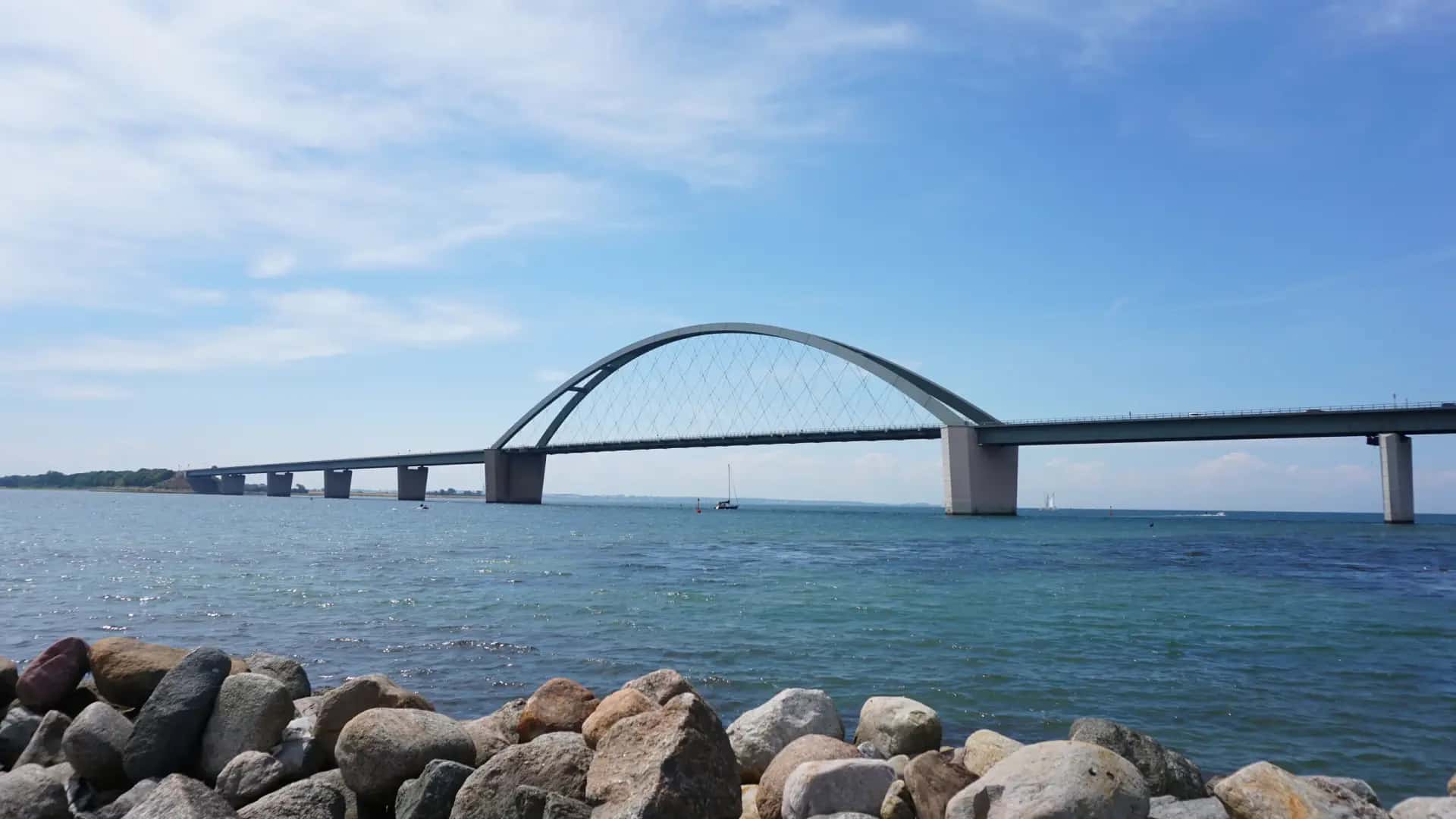
right in the middle of the sea!
Fehmarn – the sunshine island
Once you cross the Fehmarnsundbrücke, everything opens up: more sky, more sea, fewer appointments. 185 square kilometres of island, where each morning you decide what the day turns into.
185 km²
Area – Germany's third-largest island
78 km
Coastline all around the island
~2.100
Hours of sunshine a year – the sunshine island
20+
Bathing beaches, from shallow shores to steep cliffs
~300 km
signposted cycle paths
45 Min.
to Denmark by ferry
One island, plenty of room
Fehmarn is the only island in Schleswig-Holstein and, after Rügen and Usedom, the third largest in Germany. Since 1963 it has hung off the mainland on the 963-metre Fehmarnsundbrücke, which everyone here just calls the coat hanger.
Around it run 78 kilometres of coast, and behind that fields, a handful of villages and Burg, a main town where things actually happen. With 2,000 to 2,100 hours of sunshine a year, Fehmarn is one of the sunniest corners of Germany. Hence the nickname.
Some people come to surf, some for the birds, others want two weeks of doing nothing at all. All of that fits here side by side.
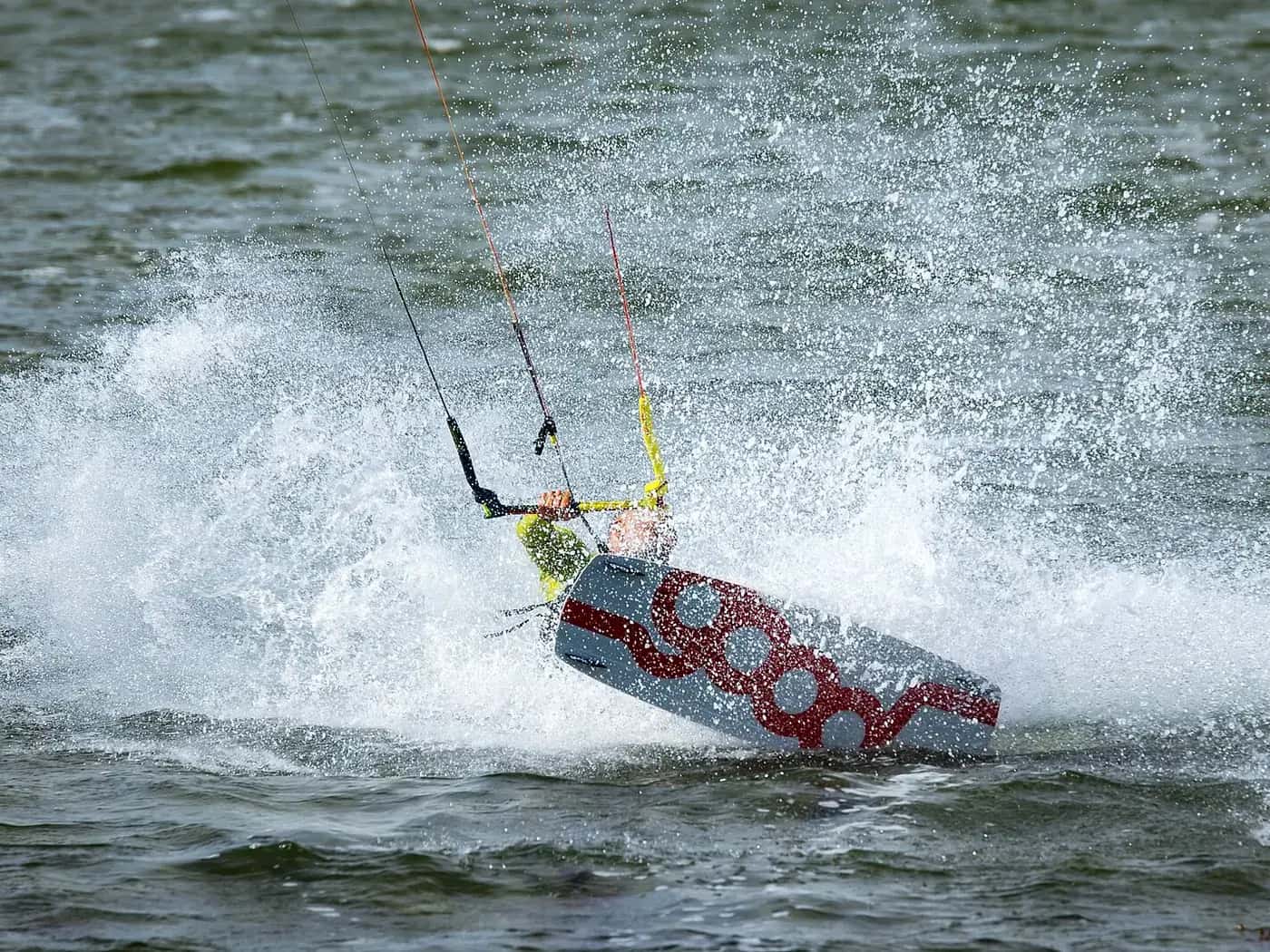
Wind & Waves
A watersports playground for everyone
The wind is why Fehmarn counts as one of Germany's best spots for surfing and kiting. It blows here fairly reliably. Beginners head for the sheltered Orther Reede. Anyone after more finds their water at Grüner Brink or Gold. And the Südstrand simply has space.
Several campsites run their own watersports school right on the beach: windsurfing, kiting, wing foiling, sailing, SUP. Hiring gear usually happens on the same jetty. And if you would rather go under the surface, there are wrecks to dive here too.
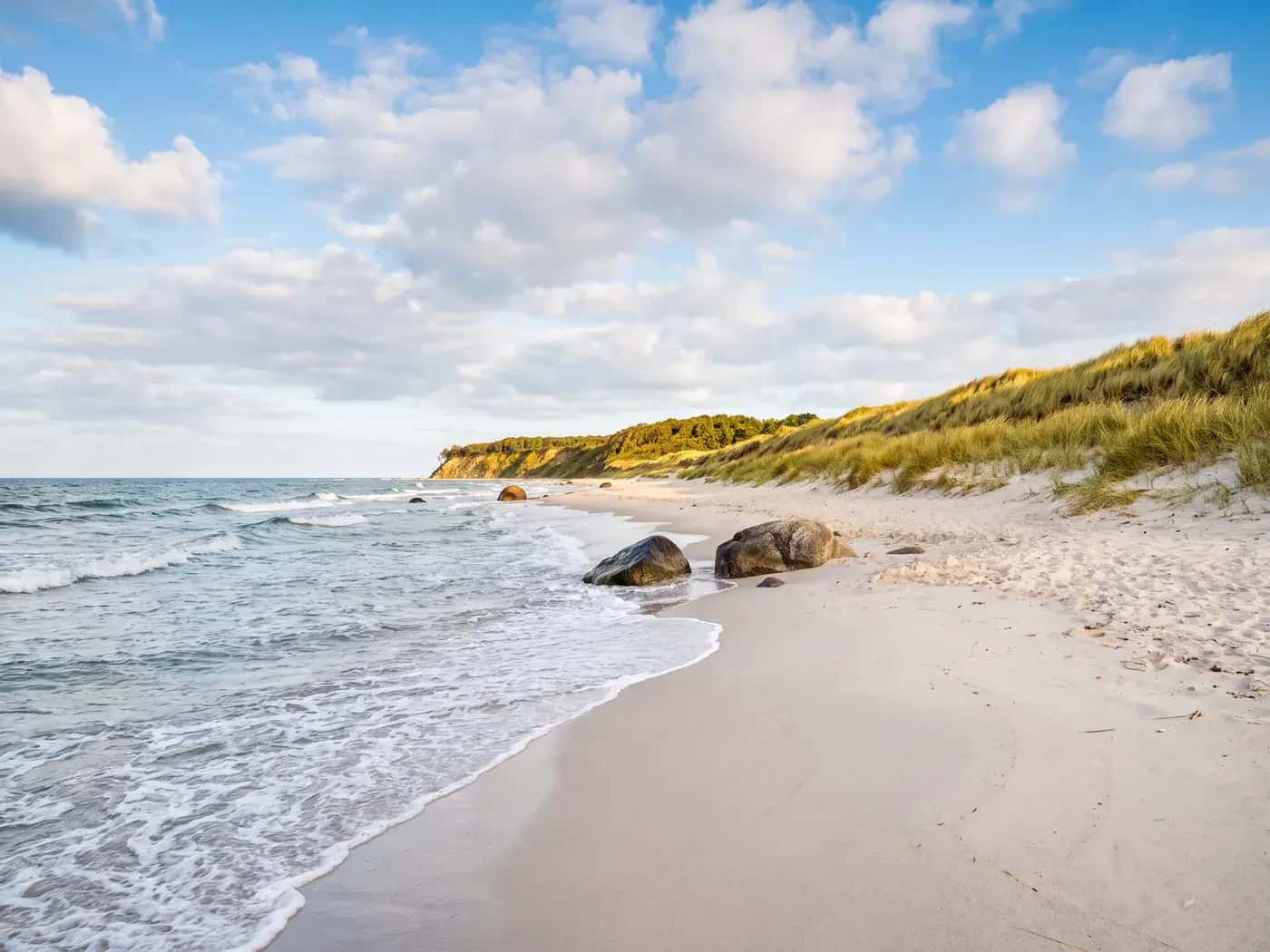
Beaches & Coasts
Fine-sand beaches and wild cliffs
More than 20 swimming beaches ring the island, and they are surprisingly unalike. The Südstrand at Burgtiefe shelves so gently that even the smallest children can paddle safely. Wulfener Hals and Gold in the southeast have the long sweeps of sand.
At Katharinenhof in the east stands a cliff up to twelve metres high. Flint lies at the foot of it, sometimes fossils too. In the west, along the Sunset Coast at Wallnau and Flügge, the sun goes down straight into the sea.
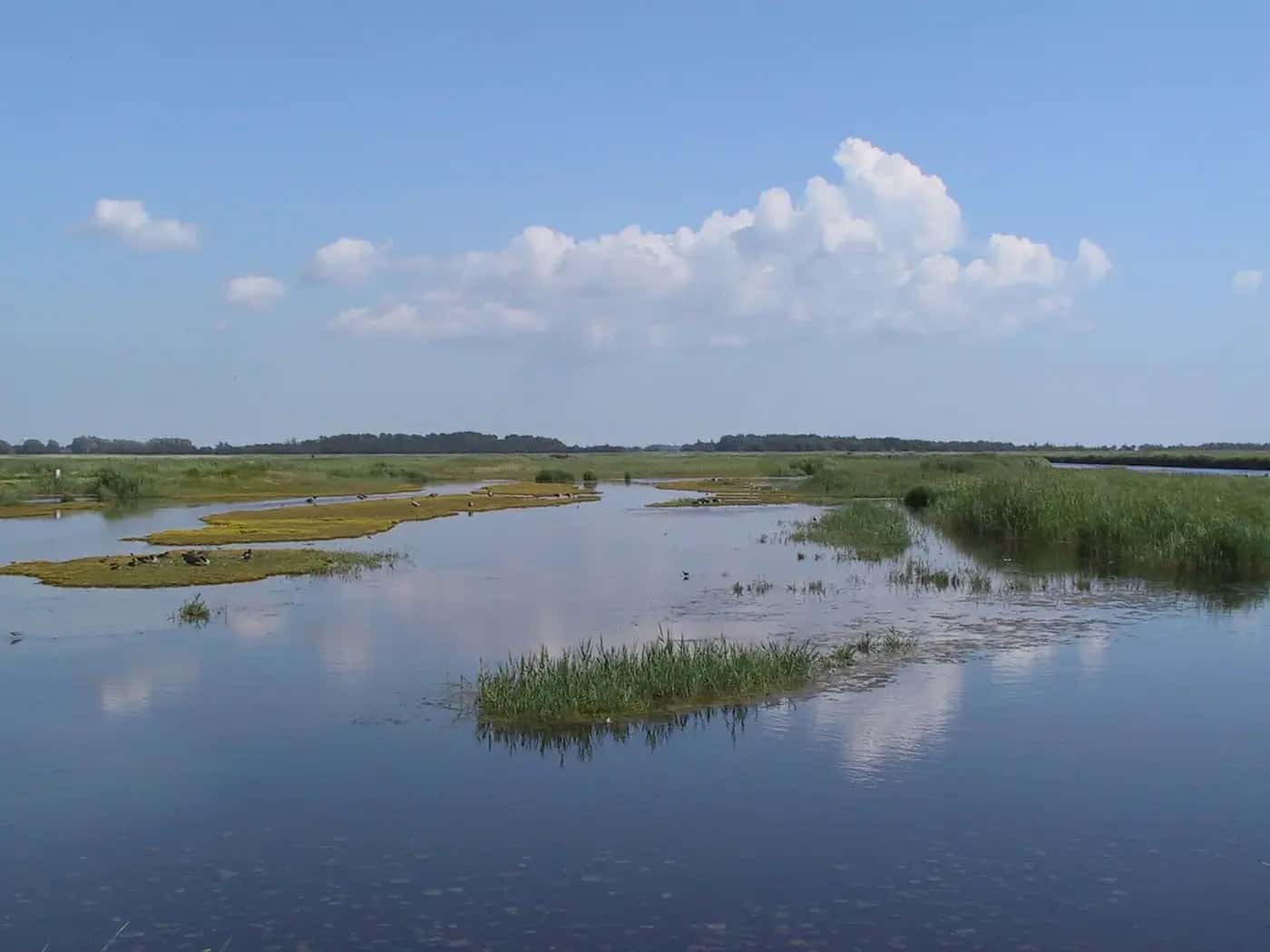
Pure nature
A bird paradise and wide-open landscapes
Fehmarn sits on one of Europe's most important bird migration routes. In spring and autumn tens of thousands stop over here: geese, cranes, waders, with sea eagles circling over the fields. At the NABU reserve in Wallnau the hides get you surprisingly close.
Other protected areas follow around the island: the Grüner Brink in the north, the Krummsteert-Sulsdorfer Wiek, the Nördliche Seeniederung. Between them dikes, inland lakes and fields that run to the horizon.
Out and active
Discover the island by bike and on foot
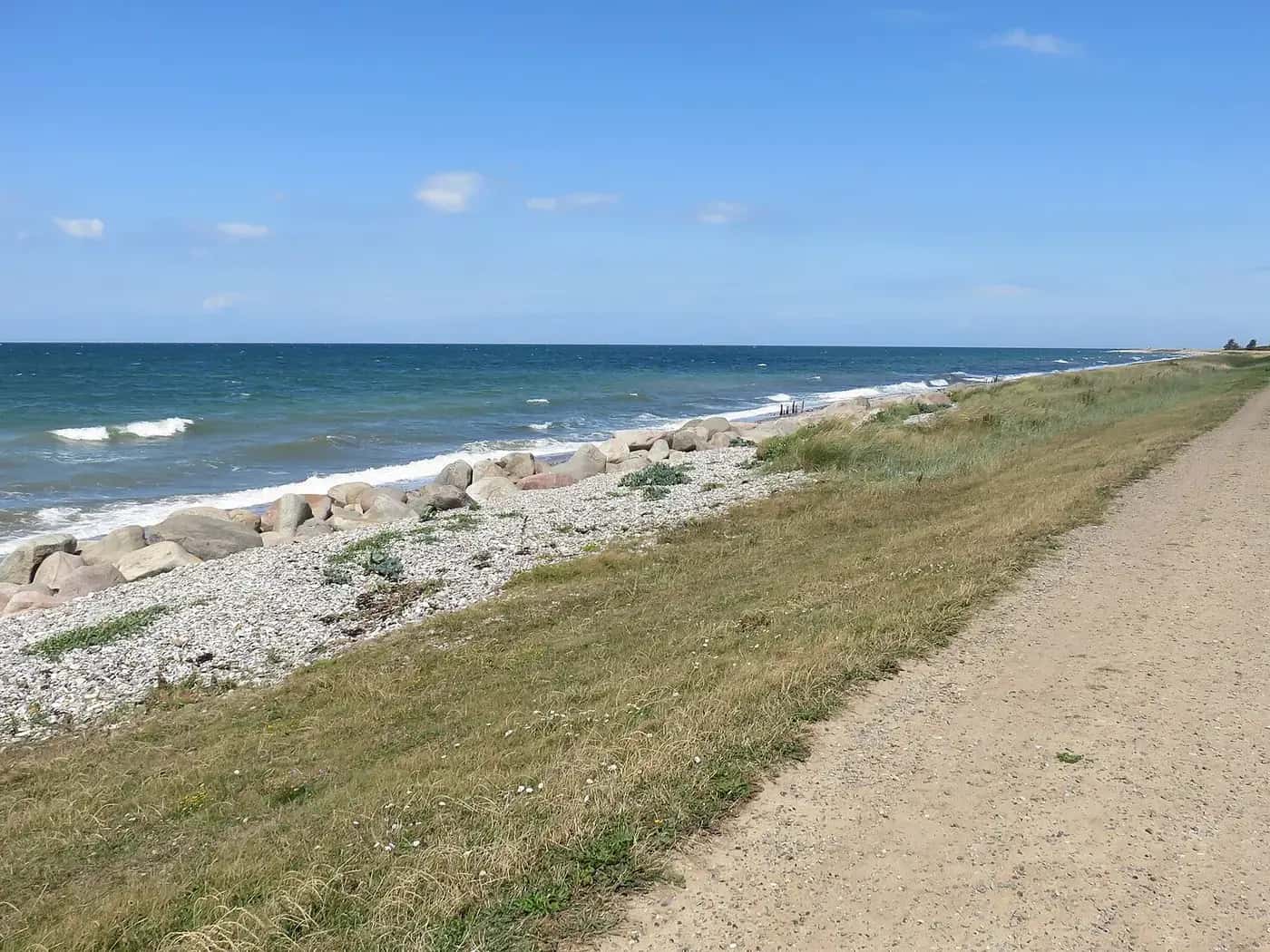
Around 300 kilometres of signposted cycle paths, and the island is flat. That makes rides workable with children too. The island circuit stays close to the coast almost the whole way, past lighthouses, small harbours and cafés with a sea view.
On foot you can walk the dikes or cross the reserves. There are riding stables, an 18-hole golf park at Wulfener Hals, and Fehmarn never runs short of wind for a kite.
Land & People
Burg, little harbours and island cuisine
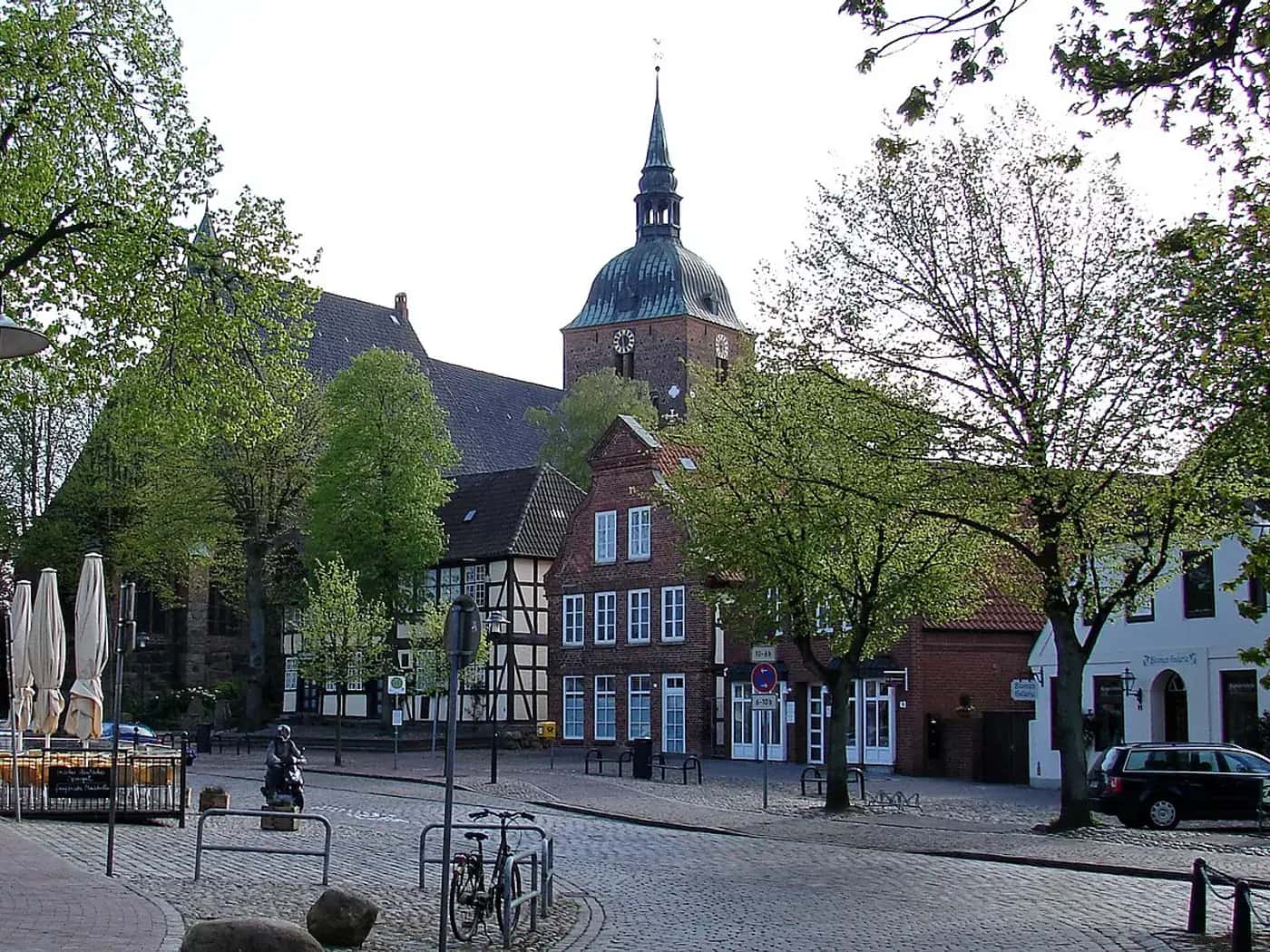
Burg is the main town: cobbles, St Nikolai church, small shops, cafés, a weekly market. Around it lie villages like Landkirchen, Petersdorf and Bannesdorf, plus the fishing harbours of Orth, Lemkenhafen and Burgstaaken.
What gets eaten is what the island and the sea provide: fish straight off the cutter, the fish roll at the harbour, sea buckthorn and honey from the farm shops. Fehmarn is farmland as well. In May the rapeseed is up and half the island turns yellow.
Around the island
Fehmarn's finest corners
Every stretch of coast is different. Here is a quick guide to what you find where.
Südstrand & Burgtiefe
A gently shelving family beach with a promenade, the Meereszentrum and watersports. The southern classic.
Wulfener Hals
A narrow peninsula between the inland lake and the Baltic: surfing, golf and nature close together.
Gold
A long, fine sandy beach in the southeast. Quiet, and wide enough for a whole day.
Katharinenhof
Wild cliffs in the east with flints and fossils at the foot of the eroding edge.
Sunset Coast (West)
Around Wallnau and Flügge the sun sets straight into the sea. Worth pushing dinner back for.
Grüner Brink
A nature reserve in the north with beach, dunes and a great many birds.
Puttgarden & Marienleuchte
The ferry port to Denmark and the island's northernmost tip with its lighthouse.
Orth & Lemkenhafen
Small fishing harbours in the west: cutters, fish rolls and an old windmill.
Landmarks
Five lighthouses
They mark the corners of the island and are popular day trips. One of them you can climb.
Flügger Leuchtturm
The only tower on the island you can climb. From the top you see the whole Sunset Coast.
Leuchtturm Staberhuk
At Fehmarn's easternmost point, high above the cliff, between fields and sea.
Leuchtturm Marienleuchte
In the north near Puttgarden, where the ferries to Denmark set off.
Leuchtturm Westermarkelsdorf
On the northwestern tip, one of the oldest lighthouses on the island.
Leuchtturm Strukkamphuk
On the south coast by the Fehmarnsund, within sight of the striking bridge.
In every season
Fehmarn all year round
Fehmarn does not only work in high summer. Each season has its own version of the island.
Spring
The rapeseed flowers, the first warm days arrive, and the birds pass over the island heading north.
Summer
High season: swimming, watersports and long evenings on the Sunset Coast.
Autumn
Strong wind for kiters and surfers, clear air and surf against the cliffs. Plus the great autumn migration.
Winter
Empty beaches, bracing walks and soothing calm. Several campsites are open all year round.
History & Culture
From Fehmarsch Platt to Jimi Hendrix
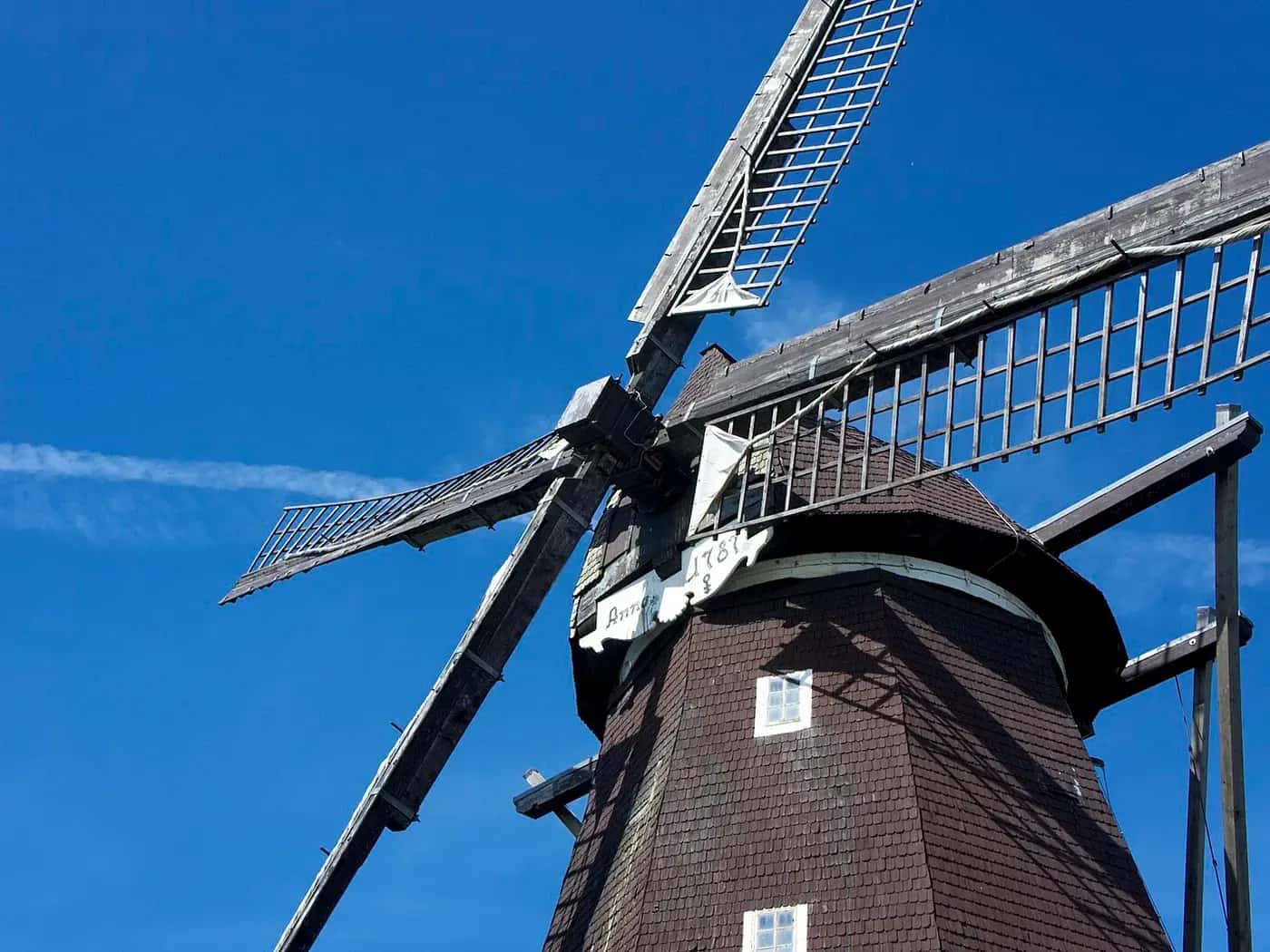
For centuries Fehmarn was under Danish influence before it became part of Schleswig-Holstein. What remains is the island dialect, Fehmarsch Platt, the old captains' houses and windmills like the one at Lemkenhafen.
In 1970 Jimi Hendrix played the Love and Peace festival on Flügger Strand. It was 6 September, twelve days before his death, and it turned out to be his last concert. A memorial stone still stands on the beach.
Experience & Enjoy
Sea life centre, submarine & more
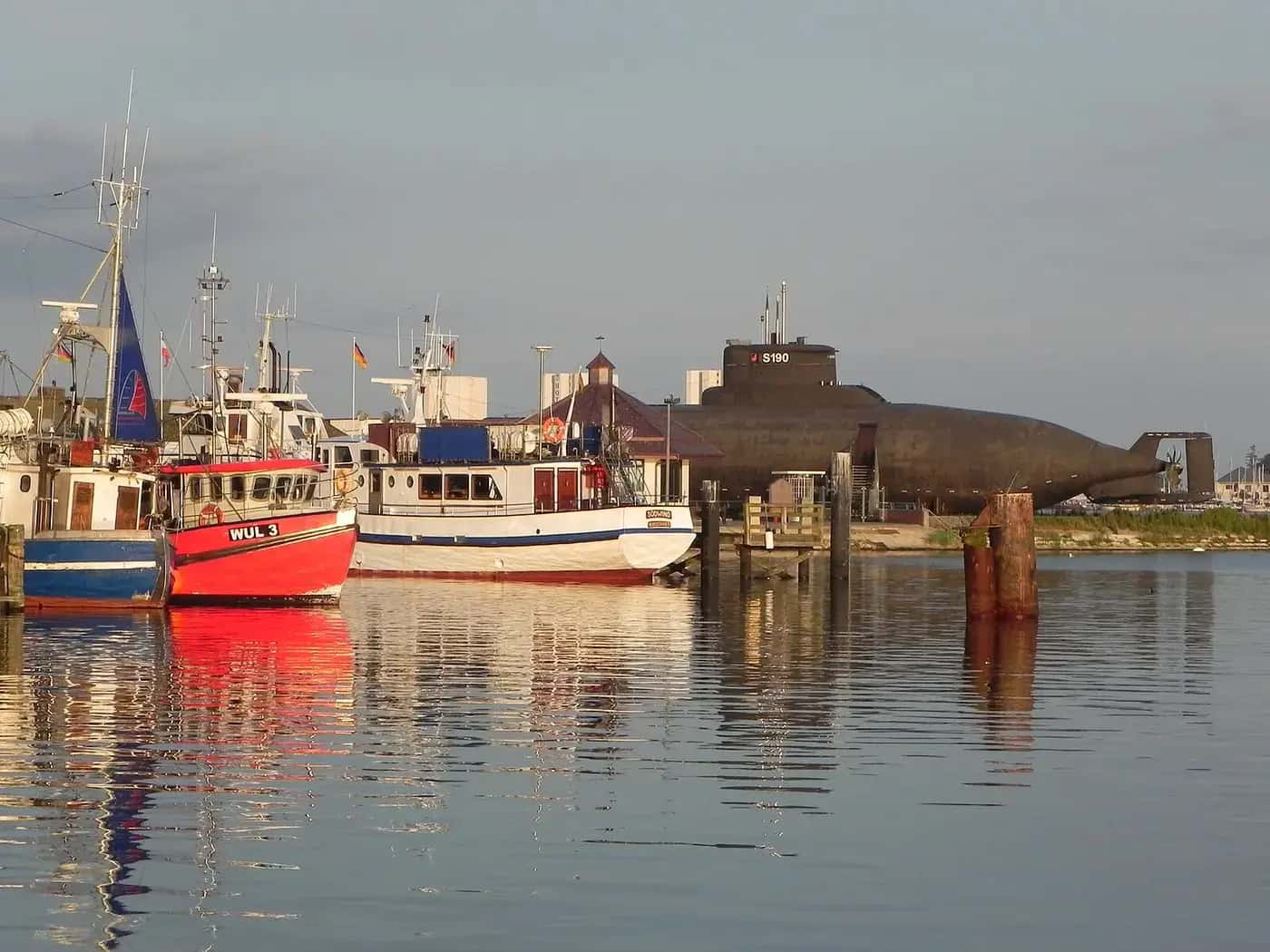
The Meereszentrum Fehmarn houses over 1,000 animals, including Germany's largest tropical shark aquarium. For something more mechanical, you can climb through the U-11 submarine in Burgstaaken harbour, or head for the Galileo Wissenswelt.
Concerts, sports events and village festivals are spread across the year. And from Puttgarden the ferry takes you to Denmark for the day. Copenhagen is closer than you think.
Getting here
Bridge, ferry – and soon a tunnel
The Fehmarnsundbrücke puts you on the island within minutes, by car, motorhome or bike. From Puttgarden the ferry crosses to Rødby in Denmark in about 45 minutes. This Vogelfluglinie is the shortest link between Germany and Scandinavia.
Then there is the Fehmarnbelt tunnel: roughly 18 kilometres of immersed tunnel under the Baltic, the longest of its kind once it opens. After that Denmark moves closer again.